
10 MIN READ
The Science Behind Lapachol: How RescueMD's DNA Repair Complex Works at the Deepest Level of Your Skin
VIP RescueMD

10 MIN READ
Table of Contents
01 What's Really Happening When Your Skin Is Damaged?
You know the moment. A day too long in the sun. Redness that lingers weeks after a laser treatment. An acne scar that never quite fades. Or skin that simply doesn’t bounce back the way it used to.
Most of us are taught to think about skin damage in surface terms: inflammation, dryness, pigment, wrinkles. So skincare focuses on what we can see—calming redness, smoothing texture, adding hydration, boosting glow.
But that’s only the first chapter of a much longer story.
Beneath every visible sign of damage is a process unfolding inside your skin cells: DNA repair. Every sunburn, procedure, breakout, or inflammatory flare creates stress at the cellular level. Free radicals form. DNA strands break. Cells rush to copy and repair themselves so your skin can heal.
And here’s the key insight most skincare never addresses:
Visible skin damage is the accumulation of microscopic DNA errors over time.
Imagine a construction crew rebuilding a house after a storm. If they’re rushed—working overnight, skipping inspections, cutting corners—the house may look "finished," but the cracks show up later. Uneven walls. Weak foundations. Doors that don’t quite close.
That’s what happens inside your skin when DNA repair goes too fast.
Most skincare works on the surface of the house. RescueMD works on the foundation of the house.


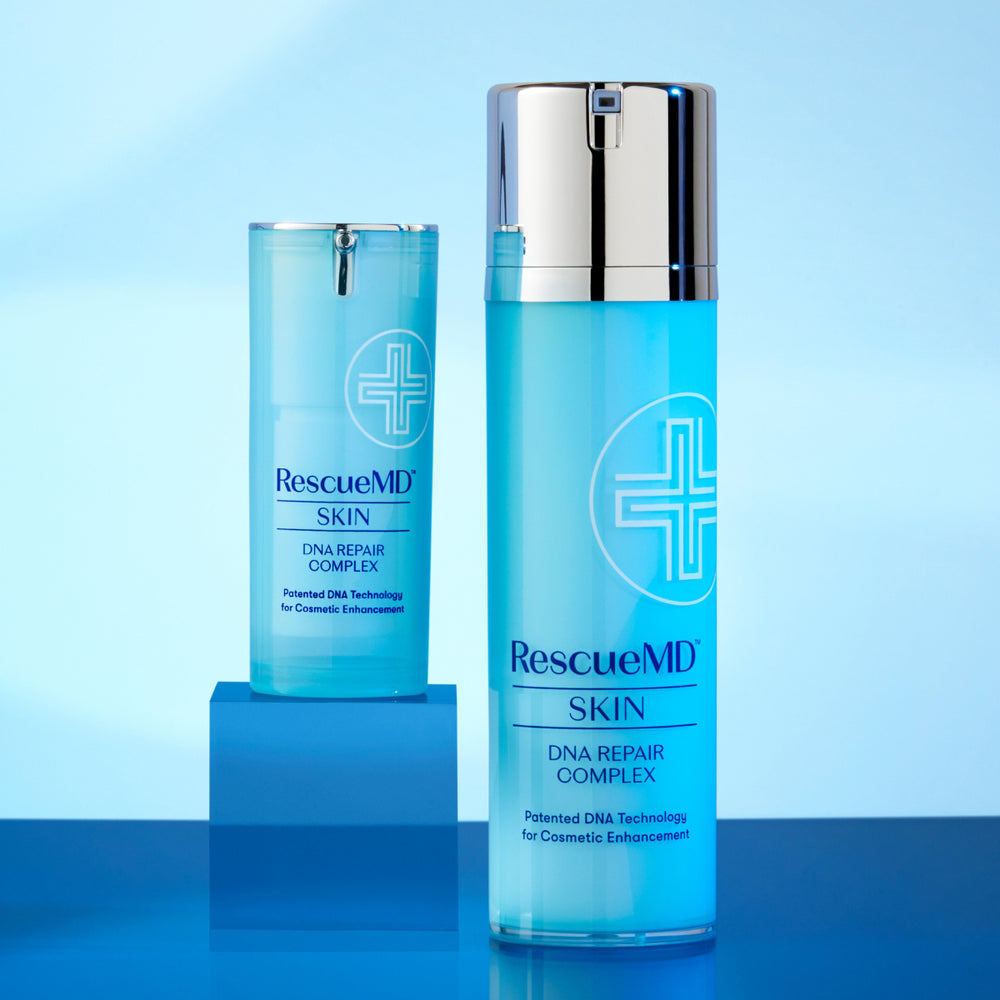
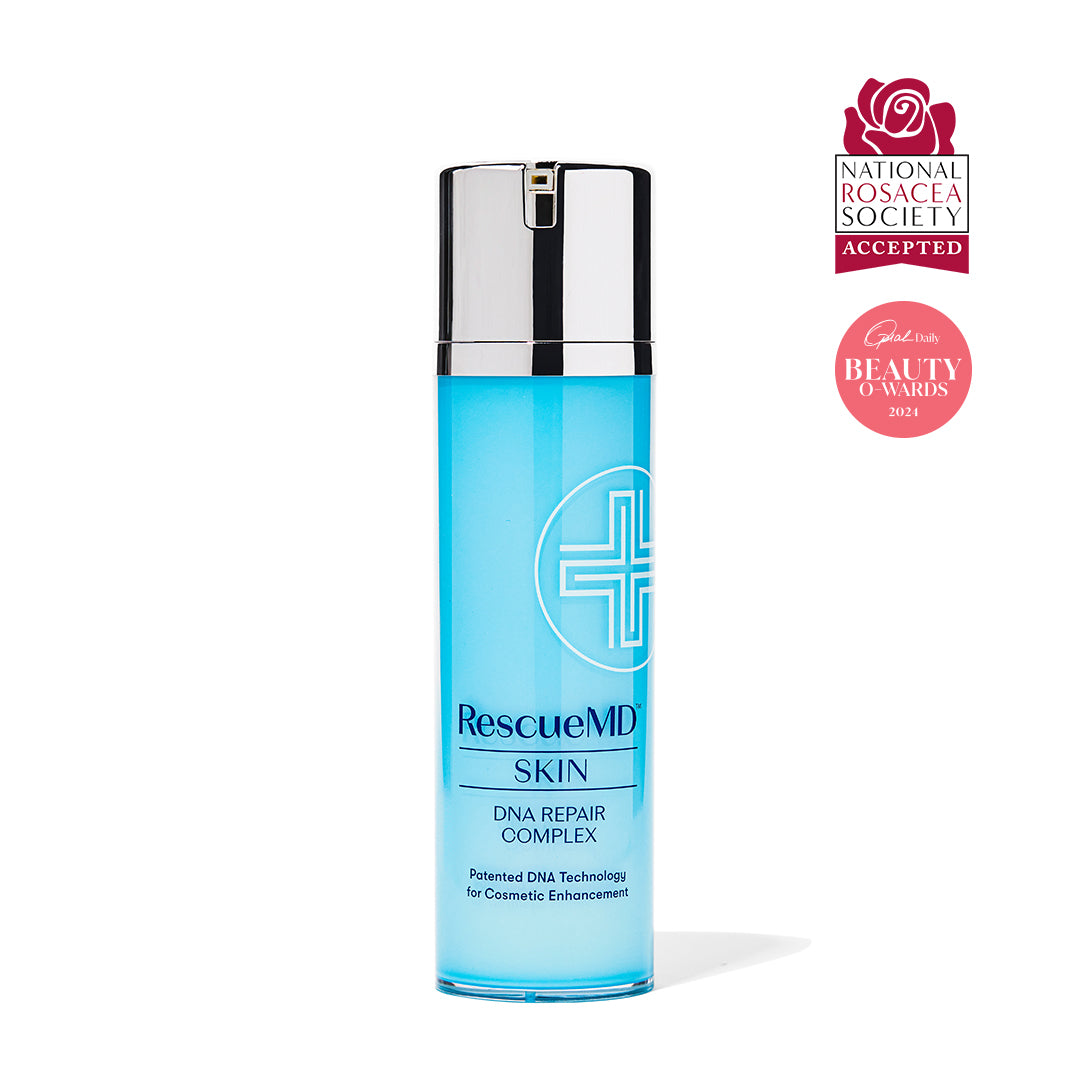
DNA Repair Complex
The Ultimate Skin Damage + Scar Treatment
$148.00 | 30mL
02 The CUL4A Problem — Why Your Skin Doesn’t Heal Perfectly
To understand why skin doesn’t always heal as well as it could, we need to meet a protein called CUL4A.
CUL4A is part of your body’s natural DNA repair machinery. Specifically, it’s a ubiquitin ligase—a regulating protein that helps control DNA replication during the skin cell repair process. In simple terms, CUL4A acts like a foreman overseeing how quickly cells move through DNA repair and replication.
Here’s the problem.
Research published in Molecular Cell has shown that CUL4A actually restricts the skin’s full DNA repair potential. In normal, healthy cells, CUL4A pushes the repair process forward at a pace that prioritizes speed over precision.
The study, CUL4A Abrogation Augments DNA Damage Response and Protection Against Skin Carcinogenesis, revealed a critical insight:
When CUL4A is inhibited or removed, cells show dramatically enhanced DNA repair.
Think of CUL4A as a foreman who’s been told to speed up the assembly line. The faster products move, the more defects slip through unnoticed. The result isn’t catastrophic failure—it’s subtle flaws that accumulate over time.
In skin, those flaws show up as redness, scars, uneven tone, premature aging, and slower recovery.
The striking takeaway from this research is profound:
03 Enter Lapachol — Nature’s DNA Repair Optimizer
Long before molecular biology could name proteins like CUL4A, indigenous communities in Central and South America were using the bark of the pau d’arco tree for healing. The bark from the tree was brewed into teas and remedies for inflammation, infections, and wound recovery.
Modern chemistry eventually identified one of pau d’arco’s most powerful compounds:
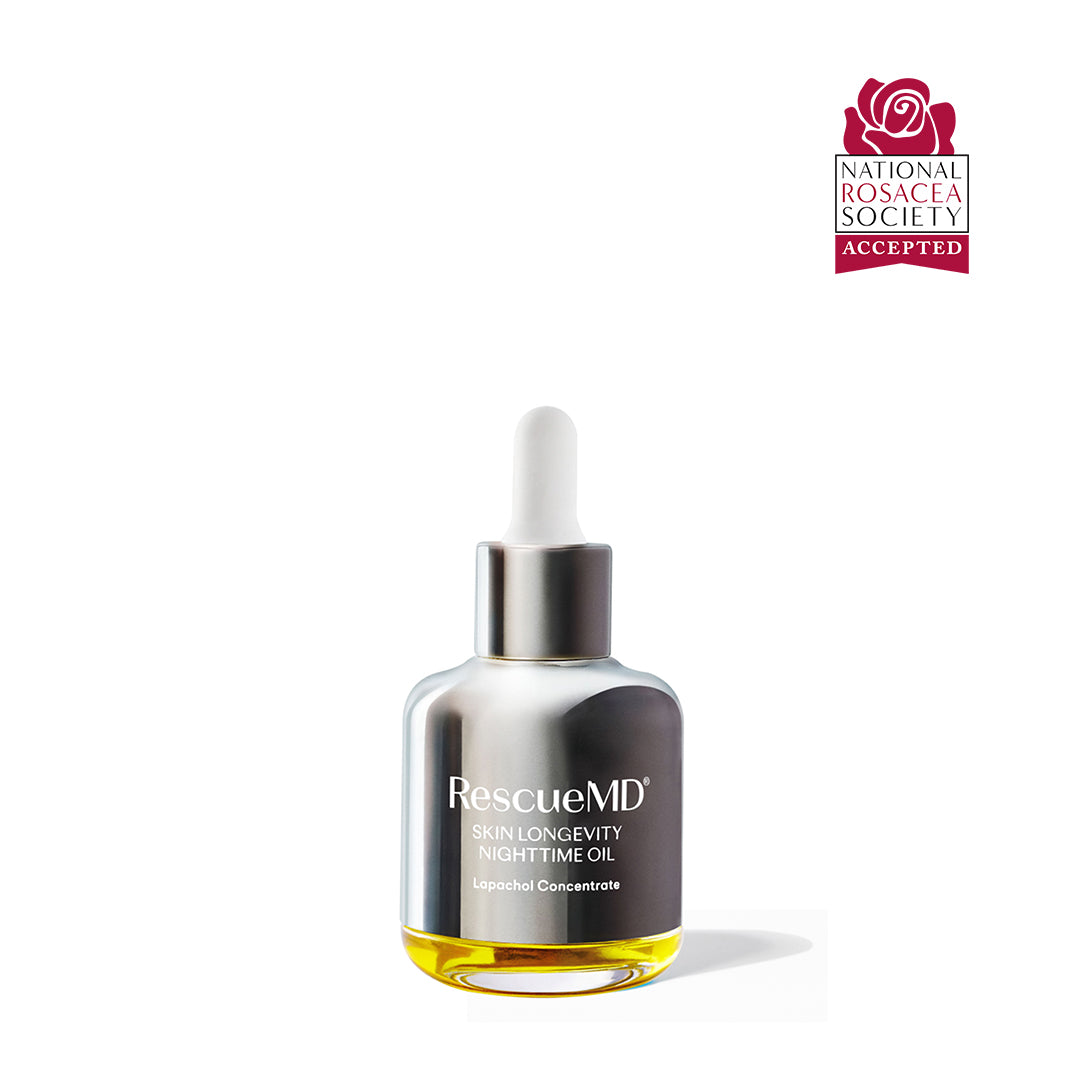
Lapachol.
Lapachol belongs to a class of molecules called naphthoquinones—naturally occurring compounds known for their biological activity. In laboratory research, lapachol demonstrated anti-inflammatory, antioxidant, antimicrobial, antibacterial, and antifungal properties.
But its most important discovery came when researchers realized something remarkable:
Lapachol inhibits CUL4A.


This is where RescueMD’s lapachol-powered science diverges from conventional skincare.
Lapachol doesn’t block DNA repair. It doesn’t shut anything down. Instead, it gently slows the DNA replication process during repair, allowing cells to work with greater accuracy, creating more supple and healthy skin.
Mechanically it looks like this:
- Lapachol inhibits CUL4A
- DNA replication slows to a more deliberate pace
- Fewer copying errors occur in the DNA
- Cellular repairs are of higher quality
- Skin regenerates stronger, calmer, and healthier
If CUL4A is the impatient foreman, lapachol is the calm project manager who says, "Let's do this right."
That distinction is everything.
04 The Clinical Proof — Numbers That Speak for Themselves
Mechanics are important. But in skincare, results matter just as much.
That’s why RescueMD has invested in independent, peer-reviewed clinical research rather than relying on internal testing or consumer surveys.
In 2024, board-certified dermatologist Dr. Zoe Draelos, MD published The Clinical Efficacy of Lapachol in Facial Redness Reduction in the Journal of Cosmetic Dermatology, which describes the impact of lapachol on improving skin health and redness.
The results of Dr. Draelos’s 8-week study were both statistically significant and clinically meaningful:
- 93% of participants saw improvement in skin redness
- 44% reduction in erythema (investigator-rated)
- 40% reduction in erythema (subject self-rated)
- 31% decrease in redness measured by colorimeter
- 29% decrease measured by dermaspectrophotometer
- Zero adverse events reported
In summary, lapachol works.
Multiple measurement tools were used—human evaluation and objective instrumentation—to eliminate bias. The findings were consistent across all methods.
RescueMD’s data was:
- Dermatologist-led
- Instrument-verified
- Peer-reviewed
- Published
Related Articles

Everything You Need to Know About Scar Formation

SKIN HEALTH