Skip ahead for some frequently asked questions and our rapid-fire responses.
A scar is not damage left behind. It's your skin naturally and visibly repairing itself, laying down collagen to seal a wound—the reason no scar ever quite matches the skin it replaced.
Run your finger across an old scar—you feel the difference before you see it. The tissue is smoother, or firmer, or slightly sunken; never an exact match for the skin around it. That mismatch is not a flaw in your healing; it is your healing. Every scar is your body’s natural method of replacing damaged skin: from injury, incision, infection.
Your skin has a unique architecture. The top layer, the epidermis, is your waterproof protector. Beneath that is your dermis, composed of connective tissues containing your hair follicles, sweat glands, nerve endings, and blood vessels. This is what’s damaged when your body rushes to heal, rapidly generating collagen to mend your wound, keeping you from contracting an infection—and the reason your scars look different from the surrounding tissue.
When skin is broken, the body’s first priority is not to restore the original architecture. It is to close the gap before infection or fluid loss becomes dangerous. The reason it never perfectly matches the surrounding skin is that the body traded quality for speed—and in nearly every case, that trade is what kept you safe.
The Three Phases of Wound Healing
Every scar is written across three overlapping phases. Understanding them is the key to understanding why one wound heals nearly invisibly and another leaves a raised or sunken mark.
Inflammation comes first. In the hours and days after injury, the body forms a clot to stop bleeding, then floods the site with immune cells to clear debris and guard against infection. This is the red, swollen, tender stage—and while it feels like the worst of it, it is only the setup.
Rapid repair rebuilds. Over roughly the next two to three weeks, specialized cells called fibroblasts arrive and begin rapidly producing collagen, initially a flexible form known as Type III collagen. New blood vessels grow, the wound contracts inward, and fresh tissue fills the gap. Speed is the priority here, and it’s what compromises the final result.
Remodeling. In the final and longest phase, the body gradually replaces weaker type III collagen with stronger, more organized Type I collagen, realigning the fibers and fading the scar from red toward pale. This phase can run from several months to full years. The scar you ultimately live with is determined less in the first dramatic week than in these quiet months of revision.
How does Lapachol work differently than other ingredients commonly used to reduce redness?
"Many anti-redness ingredients, like Bisabolol, Centella Asiatica, and Licochalcone A work at the surface to reduce inflammation. Lapachol works at the source, it inhibits Cul4A, a protein that suppresses the skin's own DNA repair capacity, effectively unlocking the cell's ability to repair the damage that causes persistent redness in the first place. It has anti-inflammatory, antioxidant, and antimicrobial properties, and supports your skin's natural DNA repair process, helping to optimize DNA repair and visibly calming redness and irritation over time."
The Types of Scars

Because the final scar depends on how the repair and remodeling phases balance out, scars fall into recognizable categories—each one the signature of a particular imbalance.
Keloid—a scar which grows beyond the edges of the original wound. Keloids carry a genetic component, continuing to overproduce collagen post-healing.
Atrophic—depressed or pitted scars which sit below skin level. The classic examples are acne scars and chickenpox marks, where too little tissue was rebuilt.
Hypertrophic—raised, firm, often red, but staying within the original boundary of the wound. The result of collagen overproduction that remodeling never fully resolves, though they may shrink with age.
Contracture—a tightened scar most often seen after burns, where the wound pulls the skin inward and can restrict movement across joints.
Atrophic vs. Hypertrophic
The two scar types people most often ask to have explained are hypertrophic and atrophic—and they are best understood as the same error pointed in opposite directions.
A hypertrophic scar is the product of too much collagen. During proliferation, fibroblasts overproduce, and the remodeling phase fails to break the excess down. The tissue piles up above the skin, leaving a raised, firm ridge. On the other hand, an atrophic scar is the product of too little. Whether from insufficient collagen production or from tissue lost during inflammation, the repair never fully fills the wound, and the surface settles into a depression.
How Lapachol Can Influence Scar Quality
If both raised and depressed scars come down to how precisely the body manages collagen, then the real variable behind a good outcome is not how fast skin closes but how carefully it rebuilds, which depends entirely on the cellular machinery doing its work accurately, particularly during the long remodeling window.
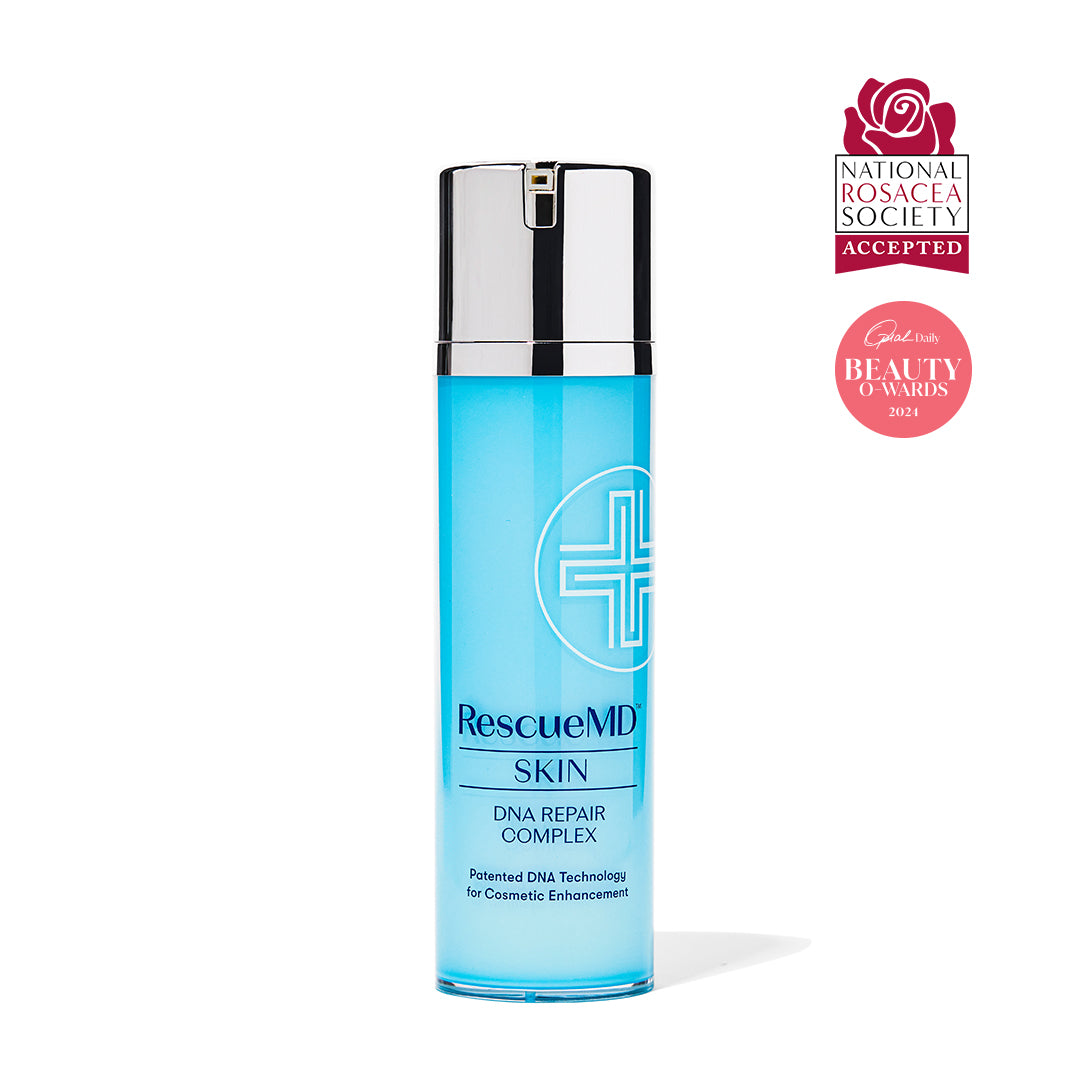
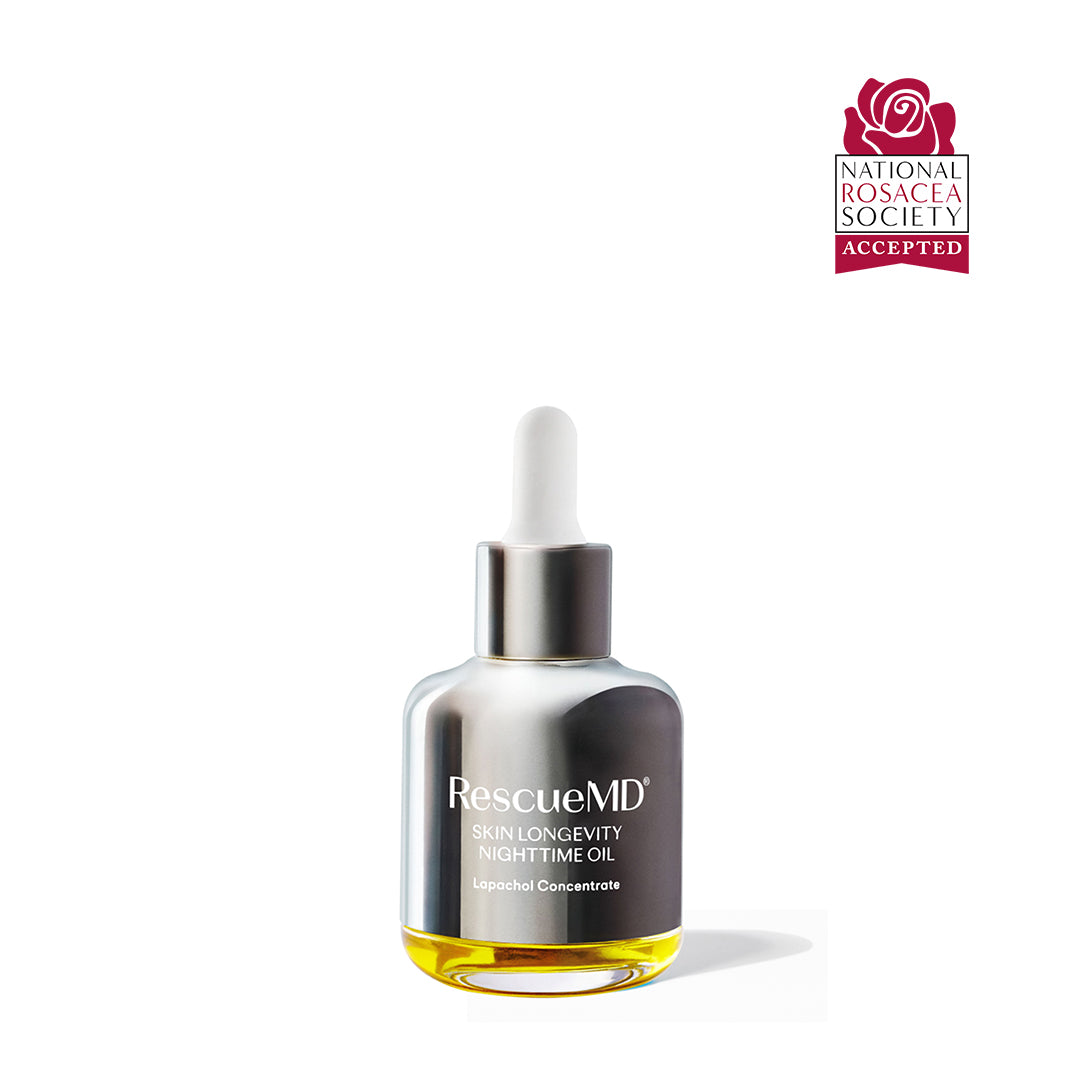
This is the level at which lapachol works. Rather than acting only at the surface, lapachol modulates a regulatory protein called CUL4A, a component of the cell's DNA repair pathway. By supporting more accurate cellular repair, the aim is a higher-quality rebuilding mechanism, the reason RescueMD (a brand built originally for surgical recovery) uses lapachol for its patented formulas.
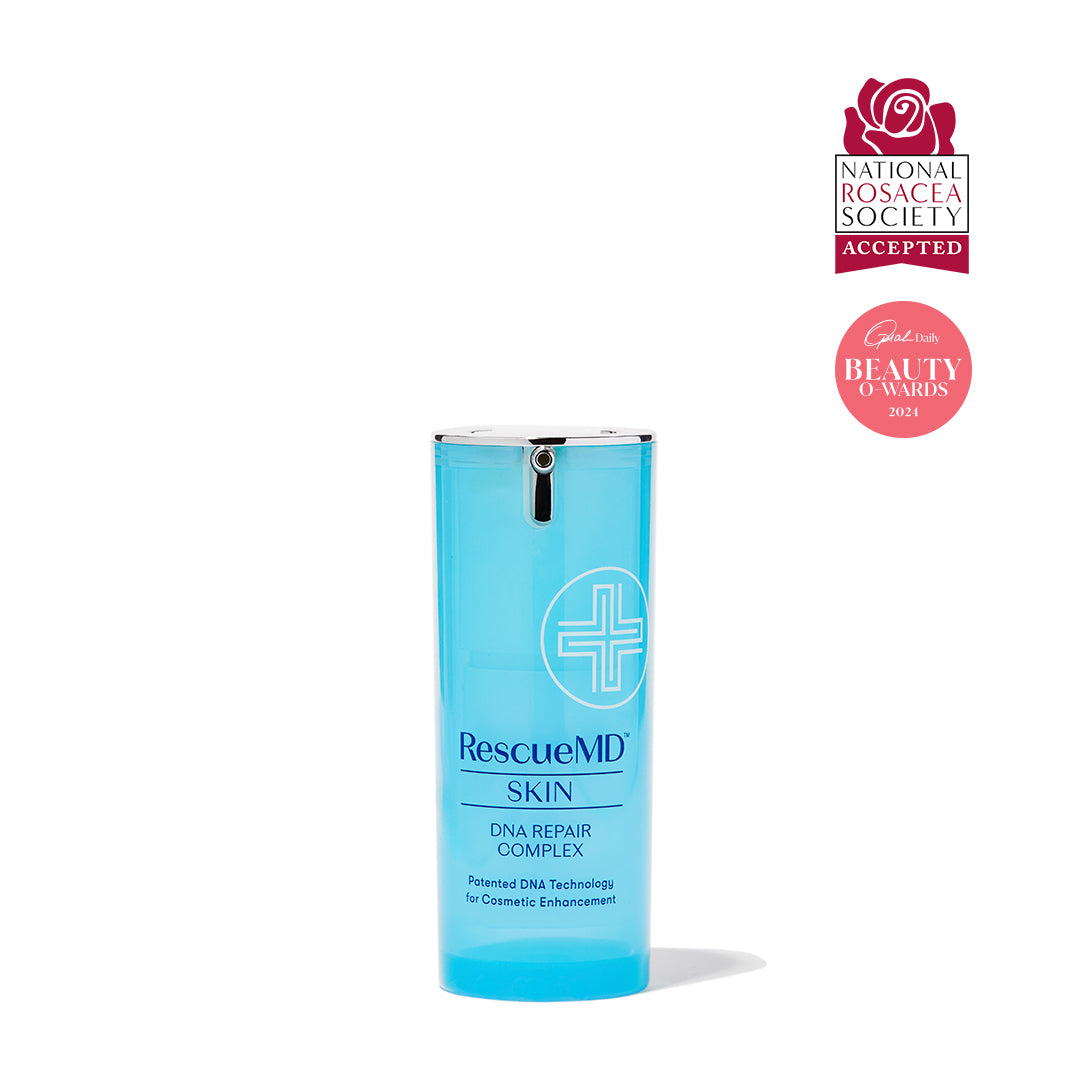
The clinical evidence speaks most directly to the inflammatory stage of healing. In a peer reviewed 8-week study published in the Journal of Cosmetic Dermatology (Draelos, 2024), measured objectively rather than by self-report, along with clinician review, 96% of subjects experienced an improvement in redness using DNA Repair complex with lapachol as well as a 44% reduction in erythema, with zero adverse events recorded.
Calming the inflammatory phase matters because that phase sets the conditions under which collagen is laid down in the first place.
You Can Influence Your Recovery
The most useful thing to take from all of this is a sense of timing. Scar care is not a one-week project—it is a remodeling-phase project. The window in which a scar is still being actively revised stretches across months. For that reason, don’t judge a scar at week two. The red, raised tissue you see early in healing is not the finished product; the same scar can soften and flatten considerably over the following year.
A scar is not the body failing. It is the body reacting—quickly and under pressure—with the materials it has on hand. You cannot ask skin not to scar; closure will always come before perfection. But the quality of that repair is not fixed the moment the wound closes. It is decided slowly, over the long remodeling months, while collagen is still being laid down and revised. That window is far longer than most people assume and it is the part of healing that remains within reach.
You’re Not Alone – See What The Community Has To Say
Frequently asked questions for a quick read…
What is a scar?
A scar is fibrous tissue that replaces normal skin after an injury reaches the dermis, the deeper structural layer. It's built almost entirely from collagen laid down in dense, parallel bundles rather than the woven pattern of healthy skin.
Why don't scars look like the surrounding skin?
Scar tissue is missing what gives normal skin its character. The collagen is arranged differently and holds little to no elastin, so it's less flexible, and it regrows no hair follicles, oil glands, or sweat glands.
Do all wounds leave a scar?
No! Damage confined to the surface epidermis regenerates invisibly. Once a wound reaches the dermis, the skin can't rebuild its original structure and repairs with collagen instead—which means a scar.
What causes scars to form?
Any event that damages the dermis. The three most common are injury (cuts, burns, abrasions), incision (surgery), and infection, where prolonged inflammation destroys extra tissue and disrupts orderly repair.
What's the difference between a hypertrophic and an atrophic scar?
They're the same imbalance in opposite directions. A hypertrophic scar comes from too much collagen and sits raised above the skin. An atrophic scar comes from too little and settles into a depression.
Why do some people scar worse than others?
Several factors: wound depth and size, location and skin tension (the chest, shoulders, and areas over joints scar more), infection or prolonged inflammation, and genetics.
How long does a scar take to heal?
Longer than most people expect. Collagen remodeling continues for months after a wound closes, and a scar's texture, height, and color are still being decided during that window. So judge a scar over the following year, not at week two!